
Retail Technology | Commerce Intelligence | AI Analytics | March 2026 | Source: MRFR
| Metric | Value | Period |
| Market Value (2032) | $27.1 Billion | Projected |
| CAGR | 19.7% | 2024–2032 |
| Market Value (2023) | $7.9 Billion | Baseline Year |
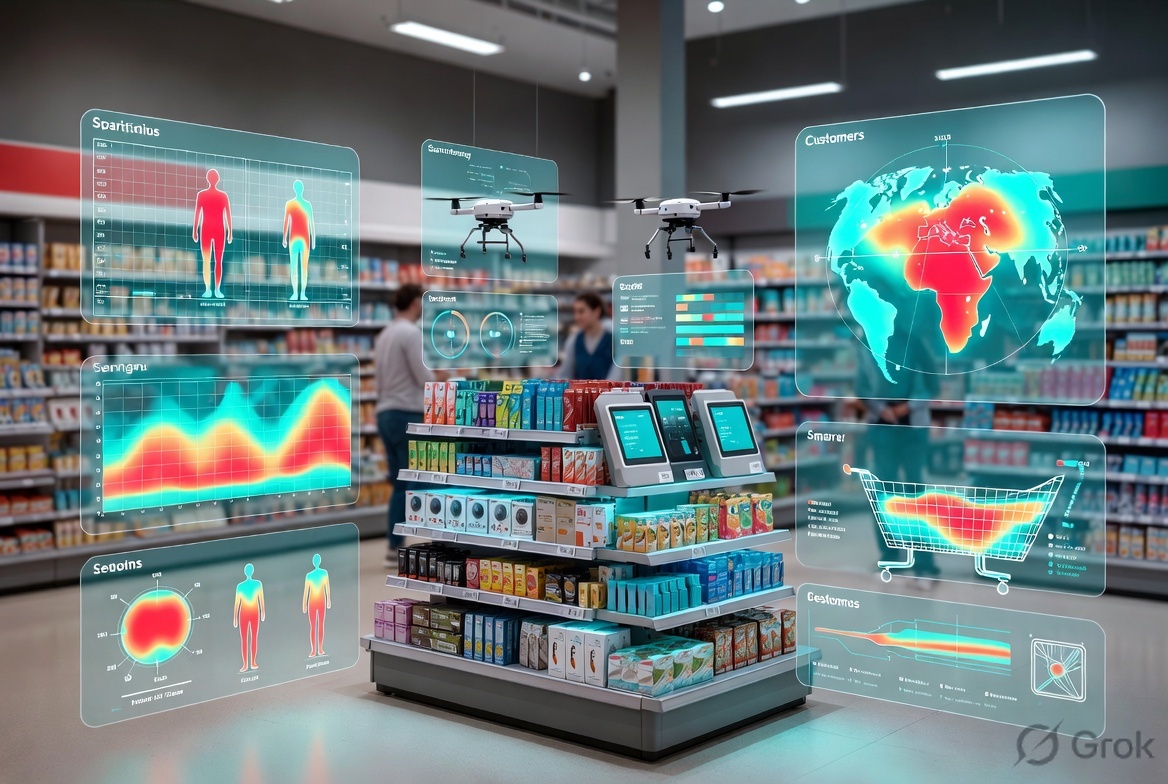
The global Retail Analytics Market is undergoing transformative growth as retailers harness AI-driven intelligence to personalise shopping experiences, optimise inventory, predict demand, and unify customer data across online and offline channels. Valued at $7.9 billion in 2023, the market is projected to reach $27.1 billion by 2032 at a 19.7% CAGR. From hyper-personalised product recommendations and dynamic pricing engines to AI-powered assortment planning and real-time shelf analytics, data intelligence is becoming the primary competitive differentiator in global retail.
What Is Driving the Retail Analytics Market?
- AI-Powered Personalisation at Scale: Recommendation engines powered by deep learning analyse browsing, purchase, and behavioural data to deliver individualised product suggestions that increase basket size, average order value, and repeat purchase frequency.
- Unified Commerce & Omnichannel Analytics: Retailers are investing in unified customer data platforms that merge in-store, online, app, and loyalty programme data into a single analytics layer — enabling consistent personalisation and attribution across all touchpoints.
- AI Demand Forecasting & Inventory Optimisation: Machine learning demand forecasting models incorporating POS data, weather, social trends, and promotional calendars reduce out-of-stocks by 30–40% and excess inventory by 15–25% versus statistical baseline models.
- Retail Media Network Analytics: As retailers monetise first-party data through onsite and offsite advertising, advanced analytics platforms measure retail media campaign performance, audience reach, and closed-loop purchase attribution.
Access the full Retail Analytics Market report for complete forecasts, segmentation analysis, and competitive landscape data.
Segment & Application Breakdown
| Segment | Primary Buyer | Use Case | Key Driver |
| Merchandising & Assortment Analytics | Buyers, Category Managers | Assortment planning, planogram optimisation | Margin improvement, shelf productivity, localisation |
| Customer & Loyalty Analytics | Marketing, CRM Teams | Customer segmentation, CLV, churn prediction | Retention, personalisation, loyalty ROI |
| Supply Chain & Inventory Analytics | Supply Chain, Operations | Demand forecasting, replenishment, allocation | In-stock rate, shrinkage reduction, working capital |
| Pricing & Promotion Analytics | Pricing, Commercial Teams | Dynamic pricing, promo ROI, markdown optimisation | Gross margin, revenue yield, competitive response |
KEY INSIGHT
Retailers deploying AI-powered analytics across personalisation, inventory, and pricing functions report a 22% increase in revenue per customer, a 31% improvement in gross margin through demand-driven replenishment, and a 44% reduction in markdown losses via predictive pricing.
Regional Market Breakdown
| Region | Maturity | Key Drivers | Outlook |
| North America | Dominant | Unified commerce analytics, retail media measurement, AI personalisation | Highest retail data maturity; Amazon-driven analytics standard |
| Europe | Strong | GDPR-compliant CRM analytics, sustainability-linked supply chain | First-party data strategy + omnichannel analytics investment |
| Asia-Pacific | Fastest Growing | China social commerce analytics, India organised retail AI, SEA e-commerce | World’s largest retail market; fastest AI adoption pace |
| Latin America | Emerging | Brazil e-commerce analytics, regional loyalty programme intelligence | Digital retail growth enabling analytics investment |
Competitive Landscape
Leading players operating in the Retail Analytics Market include: SAP Retail, Oracle Retail, Microsoft (Dynamics 365), Salesforce Commerce Cloud, dunnhumby, Blue Yonder, Infor, 1WorldSync.
Market Outlook Through 2032
Through 2032, the Retail Analytics Market will be defined by AI-native commerce intelligence, real-time unified customer data, and the convergence of retail media and personalisation analytics. Retailers and analytics vendors that deliver closed-loop intelligence across the full customer journey will sustain the highest revenue growth and margin performance in an intensely competitive global retail landscape.
Get the full data — free sample available:
→ Download Free Sample PDF: Retail Analytics Market Sample Report
→ Purchase Full Report: Retail Analytics Market Full Report (2025–2032)
Market data sourced from Market Research Future (MRFR). Published March 2026. For custom research enquiries, contact MRFR.